
How to Comb for Lice Properly
Effective lice combing is not about making a few quick passes through the hair. It is a systematic process that combines careful sectioning, slow strokes and repeated inspection from the scalp to the ends.
A lice comb can physically remove live lice, dead lice and firmly attached eggs from the hair. But even a well-designed comb will be less effective when it is passed too quickly, used on tangled hair or moved through sections that are too large.
Proper lice combing requires patience and a repeatable method. Every area of the scalp must be covered, and each section should be combed from the roots to the ends until no additional lice or eggs are being captured.
This guide explains the process step by step. For a broader overview of treatment options, including topical and prescription products, read our guide to how to get rid of lice.
What You Need Before You Start
Prepare everything before beginning so that you can work through the hair without interruptions.
A fine-toothed lice comb
Use a comb specifically designed to capture lice and nits rather than an ordinary styling comb.
Strong lighting
Natural daylight or a bright directional lamp will make small lice and eggs easier to see.
Hair clips
Clips help keep treated and untreated sections separated.
A regular brush or comb
Detangle the hair before introducing the fine-toothed lice comb.
White tissue or paper towel
Use a light-colored surface to clean and inspect the comb after every pass.
Conditioner when wet combing
Conditioner helps the comb move through wet hair and can make systematic combing easier.
Should You Comb Wet or Dry Hair?
Both wet and dry detection methods exist, but wet combing is commonly used because conditioned hair is easier to divide and comb systematically.
For wet combing, wash the hair with an ordinary shampoo, apply a generous amount of conditioner and leave the hair wet while you work. Do not rinse out the conditioner before combing unless the instructions for a topical treatment say otherwise.
Using a lice treatment? Follow the product instructions first. Some medications specify whether the hair should be clean, dry, wet or free from conditioner. Conditioner can interfere with certain formulations, so the medication label takes priority.
Wet combing can also help with detection. Research has found comb-based examination to be more sensitive than visual scalp inspection for finding live lice.
Learn more about diagnosis in How to Check for Lice.
Step 1: Detangle the Hair Completely
Before using the lice comb, remove knots with an ordinary wide-toothed comb or brush.
This preparation matters because a lice comb has very closely spaced teeth. When it encounters a knot, the comb may stop before completing the stroke or pull uncomfortably on the scalp.
Begin at the ends of long hair and gradually work upward until the brush or regular comb moves freely from the roots to the tips.
Do not use the lice comb as a detangling tool. Its job begins once the hair is smooth enough to allow complete, controlled passes.
Step 2: Divide the Hair Into Small Sections
Sectioning is one of the most important parts of effective lice combing. Working randomly through the hair makes it easy to miss areas or comb the same section repeatedly while overlooking another.
Separate the hair into four main zones:
- front left;
- front right;
- back left;
- back right.
Secure three zones with clips and begin with the remaining one. Within that area, isolate a small section narrow enough for the teeth of the comb to pass through the full depth of the hair.
A practical rule: if the comb cannot enter close to the scalp and pass through every strand in the section, the section is too large.
Keep completed sections separated from hair that has not yet been checked. This gives the process a clear beginning and end.
Step 3: Begin Each Pass at the Scalp
Position the comb as close to the scalp as is comfortable. The teeth should enter the section at the roots rather than halfway down the hair.
This is particularly important because female lice attach their eggs to individual hair shafts close to the scalp, where warmth supports development.
Pay close attention to:
- the hairline around the neck;
- the areas behind both ears;
- the crown of the head;
- the temples and front hairline.
These areas can be difficult to inspect visually and are easily missed during hurried combing.
Step 4: Comb Slowly From the Roots to the Ends
Draw the comb through the complete length of the section in one slow, controlled movement.
Avoid short or superficial strokes. Beginning at the roots but stopping halfway down the hair can leave captured lice within the section and prevents a complete inspection of the strand.
Maintain a consistent orientation and steady contact with the hair. The objective is not to apply excessive force, but to ensure that the full section passes between the teeth.
For long or very thick hair, use smaller sections rather than forcing a large volume of hair through the comb.
Step 5: Clean and Inspect the Comb After Every Pass
After each stroke, wipe both sides of the comb and the spaces between the teeth on white tissue, paper towel or a clean white cloth.
Cleaning the comb serves three purposes:
- it removes captured lice and eggs from the teeth;
- it prevents captured material from being carried into another section;
- it allows you to inspect what has been removed.
Under strong lighting, look for moving lice, small nymphs and oval structures that may be eggs or egg casings.
Dandruff and hair debris generally move or brush away easily. Nits are attached to one side of a hair shaft and are more difficult to slide off. See our visual guide to what nits look like and our comparison of lice eggs vs. dandruff.
Step 6: Repeat Each Section Until It Is Clear
One pass through a section is rarely enough. Change the angle slightly and repeat the stroke from the scalp to the ends.
Continue cleaning the comb after every pass. Once several consecutive strokes produce no additional lice or eggs, clip the completed section away and move to the next one.
Follow the same sequence across the entire scalp. When every section has been completed, comb through the whole head once more as a final check.
Isolate a small amount of hair.
Move slowly from scalp to ends.
Wipe and inspect after every pass.
Continue until the section is clear.
The Professional Combing Method, Summarized
Specialized lice clinics generally approach combing as a systematic inspection and removal process rather than an ordinary grooming task.
Prepare
Detangle the hair and organize the necessary tools.
Section
Separate treated hair from hair that still needs checking.
Start at the roots
Place the teeth close to the scalp at the beginning of every pass.
Complete the stroke
Comb slowly through the full length of the hair.
Inspect
Clean the comb and check what was captured.
Verify
Repeat the section until consecutive passes are clear.
How Often Should You Comb for Lice?
The correct schedule depends on whether combing is being used as the main removal method or alongside a topical treatment.
When wet combing is the primary method
The NHS recommends wet combing on:
- Day 1
- Day 5
- Day 9
- Day 13
A final check is recommended on day 17. This schedule is intended to remove newly hatched lice before they mature and begin laying more eggs.
When combing accompanies a topical treatment
Follow the treatment label or the instructions provided by a healthcare professional. Some products require a second application because they do not kill every egg, while others may work with a single application.
The CDC recommends using a fine-toothed comb to remove dead or remaining live lice after treatment. Combing can also remove eggs and casings left attached to the hair.
Do not apply medication more frequently than directed simply because a nit remains visible.
Common Lice-Combing Mistakes
Working with sections that are too large
Thick sections prevent the teeth from contacting every strand and make it difficult to begin close to the scalp.
Starting halfway down the hair
This misses the root area, where recently laid eggs are commonly found.
Combing too quickly
Fast strokes reduce control and make it easier for strands to escape the teeth.
Using the lice comb to detangle
Knots interrupt the stroke and can make the process uncomfortable. Detangle with a regular brush or comb first.
Not cleaning the comb after every pass
A comb filled with hair and debris cannot maintain the same contact and may carry captured material into the next section.
Stopping after one session
Very small lice and viable eggs can be missed. Follow-up sessions are needed to verify that the infestation has ended.
Assuming every white speck is a viable nit
Hair casts, dandruff and empty egg casings can remain visible. Active infestation is best confirmed by finding a live crawling louse.
Does the Quality of the Lice Comb Matter?
Technique is essential, but comb design determines how effectively that technique is translated into mechanical removal.
Important characteristics include:
- consistent spacing between the teeth;
- teeth rigid enough to maintain their geometry during use;
- sufficient tooth length for different volumes and types of hair;
- a corrosion-resistant material suitable for repeated cleaning;
- a grip that allows precise control close to the scalp.
Comparative research has found meaningful differences in the ability of commercial comb designs to remove lice and their eggs.
Read our evidence-based guide to how to choose the best lice comb and learn more about how micro-grooved teeth support mechanical removal.
A Precise Technique Deserves a Precision Comb
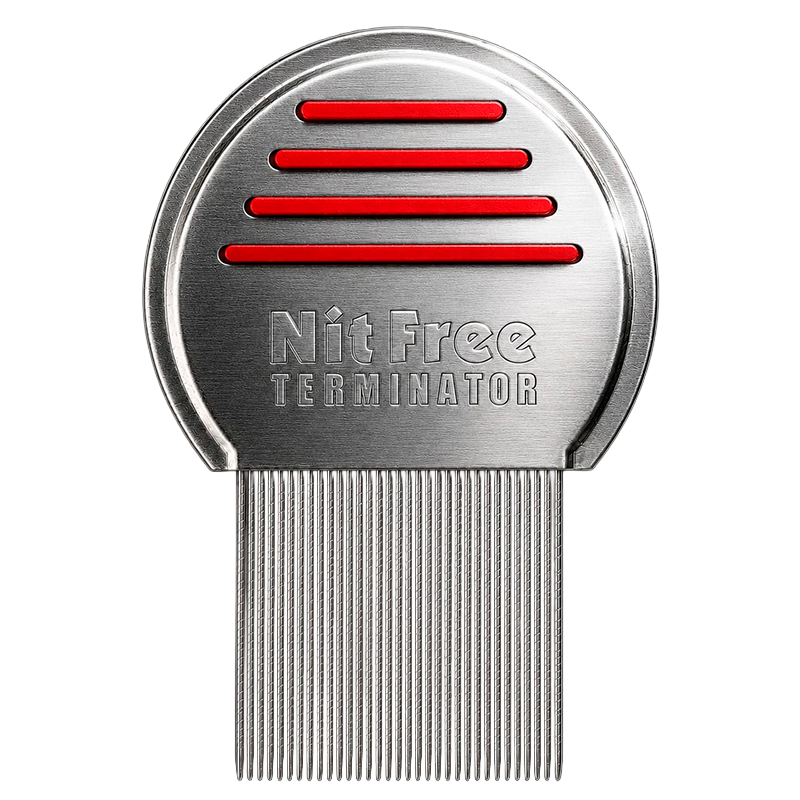
Nit Free Terminator was designed specifically to remove lice and firmly attached nits through systematic mechanical combing.
Its long, rigid stainless steel teeth maintain consistent spacing through the hair, while microscopic grooves increase the contact surface available to capture lice and eggs during each pass.
Its anti-slip grip gives the user greater control when beginning close to the scalp and working through small sections.
How to Clean the Lice Comb After Use
Remove trapped hair and visible debris from between the teeth after every session. Wash the comb according to the manufacturer’s instructions and dry it completely before storing it.
Nit Free Terminator is manufactured from corrosion-resistant stainless steel and designed for repeated use. Customers frequently report that combs purchased many years earlier remain in excellent working condition.
Do not share a lice comb between people during the same session unless it has first been thoroughly cleaned.
Frequently Asked Questions
Should I use conditioner when combing for lice?
Conditioner is commonly used for wet combing because it helps the comb move through the hair. However, it may interfere with certain topical treatments. Always follow the treatment label when a medication is being used.
Should I comb lice from wet or dry hair?
Either method can be used for inspection, but wet, conditioned hair is often easier to divide and comb systematically. Follow any specific instructions provided with a treatment product.
How many times should I comb each section?
There is no fixed number. Repeat each section until several consecutive passes no longer capture lice or eggs.
Do I need to clean the comb after every pass?
Yes. Cleaning after each pass removes captured material, keeps the spaces between the teeth clear and lets you monitor what is being removed.
Can I use a regular comb instead of a lice comb?
A regular comb is useful for detangling, but its teeth are generally too widely spaced to reliably capture small lice and attached eggs. Use a fine-toothed comb designed for lice removal.
Should I comb every day?
Not necessarily. When wet combing is used as the main method, the NHS recommends sessions on days 1, 5, 9 and 13, followed by a final check on day 17. When using medication, follow its specific instructions.
How do I know when the lice are gone?
Continue scheduled checks until repeated, thorough combing sessions find no live crawling lice. Nits or empty egg casings may remain visible after successful treatment, so the presence of a live louse is the clearest evidence of active infestation.
Good Combing Is a Systematic Process
Removing lice is not about making a few quick passes through the hair. It is a structured process of sectioning, inspection and physical removal.
Every section should be combed from the scalp to the ends. The comb should be cleaned after every stroke, and the process should be repeated until the section is clear.
Follow-up matters just as much as the first session. Scheduled checks help identify newly hatched lice before they mature and continue the infestation.
Nit Free Terminator was designed to support this precise, methodical technique. Its rigid, precision-spaced, micro-grooved stainless steel teeth help physically capture live lice, dead lice and firmly attached nits throughout treatment and follow-up.
The right technique and the right tool work together: technique ensures that every area is covered, while Nit Free Terminator provides the mechanical precision needed to remove what each pass encounters.
Scientific and Clinical References
- National Health Service. Head Lice and Nits. Guidance on wet combing technique and treatment schedule. View source .
- Centers for Disease Control and Prevention. Treatment of Head Lice. Updated November 12, 2024. View source .
- Centers for Disease Control and Prevention. Clinical Care of Head Lice. Updated January 31, 2025. View source .
- Centers for Disease Control and Prevention. About Head Lice. Updated June 4, 2024. View source .
- De Maeseneer J, Blokland I, Willems S, Vander Stichele R, Meersschaut F. Wet Combing Versus Traditional Scalp Inspection to Detect Head Lice in Schoolchildren: Observational Study. BMJ. 2000;321:1187–1188. View source .
- Mumcuoglu KY, et al. International Recommendations for an Effective Control of Head Louse Infestations. International Journal of Dermatology. 2021;60(3):272–280. View source .
- Gallardo A, Mougabure-Cueto G, Vassena C, Picollo MI, Toloza AC. Comparative Efficacy of Commercial Combs in Removing Head Lice (Pediculus humanus capitis). Parasitology Research. 2013;112(3):1363–1366. View source .
- Speare R, Canyon DV, Cahill C, Thomas G. Comparative Efficacy of Two Nit Combs in Removing Head Lice Eggs. International Journal of Dermatology. 2007. View source .