
Identification Guide
Lice Eggs vs Dandruff
Lice eggs and dandruff may look similar at first glance, but they are very different. Dandruff is made of loose skin flakes that brush away easily, while lice eggs (nits) are firmly attached to individual hair shafts and require mechanical removal.
- Dandruff brushes away easily.
- Nits stay attached to individual hairs.
- Location, shape and movement reveal the difference.
Why Lice Eggs and Dandruff Are Often Confused
Both dandruff and lice eggs appear as small light-colored particles in the hair. Parents often discover tiny white specks during routine brushing and immediately wonder whether they are dealing with dandruff or head lice.
The similarity ends there. Dandruff consists of dead skin cells that naturally shed from the scalp. Lice eggs are protective capsules attached to the hair by female lice using a strong adhesive.
What Does Dandruff Look Like?
Dandruff appears as irregular white or gray flakes that rest loosely on the scalp and hair. The flakes vary in size and often move freely when touched.
Because dandruff is loose skin, it usually falls away when brushing, scratching or washing the hair.
What Do Lice Eggs Look Like?
Lice eggs, also known as nits, are tiny oval structures attached to individual hairs. Live eggs often appear tan, yellowish or brown, while empty egg cases become lighter after hatching.
Unlike dandruff, nits remain fixed in one position because they are attached directly to the hair shaft.
How to Tell the Difference
Try the Movement Test
One of the easiest ways to distinguish lice eggs from dandruff is to observe whether the particle moves.
Dandruff usually slides away or falls off with gentle brushing. A nit remains attached and typically does not move without using significant force or a fine lice comb.
Where Are Lice Eggs Usually Found?
Female lice prefer to lay eggs close to the scalp where the temperature is ideal for development.
The most common areas include behind the ears, around the neckline and near the temples. Discovering several attached particles in these locations increases the likelihood that they are nits rather than dandruff.
Why Nits Stay Attached
Each egg is attached using a natural adhesive produced by the female louse. This keeps the egg secure until it hatches.
Because of this attachment, shampooing or rinsing alone usually does not remove nits. Mechanical removal with a precision lice comb is often necessary.
Why Correct Identification Matters
Confusing dandruff with lice eggs may cause unnecessary worry. Confusing lice eggs with dandruff can delay removal and allow lice to continue reproducing.
Taking a few minutes to inspect the particles carefully can help determine the appropriate next step.
Remove Nits with Confidence
Nit Free Terminator is a professional-grade stainless steel lice comb trusted by clinics, healthcare professionals and families around the world.
Its precision tooth spacing and micro-grooved teeth are designed to help capture and remove lice, nits and empty egg cases from the hair.
If you suspect the white particles are lice eggs, a quality lice comb is one of the most effective tools for confirming and removing them.
Explore Nit Free Terminator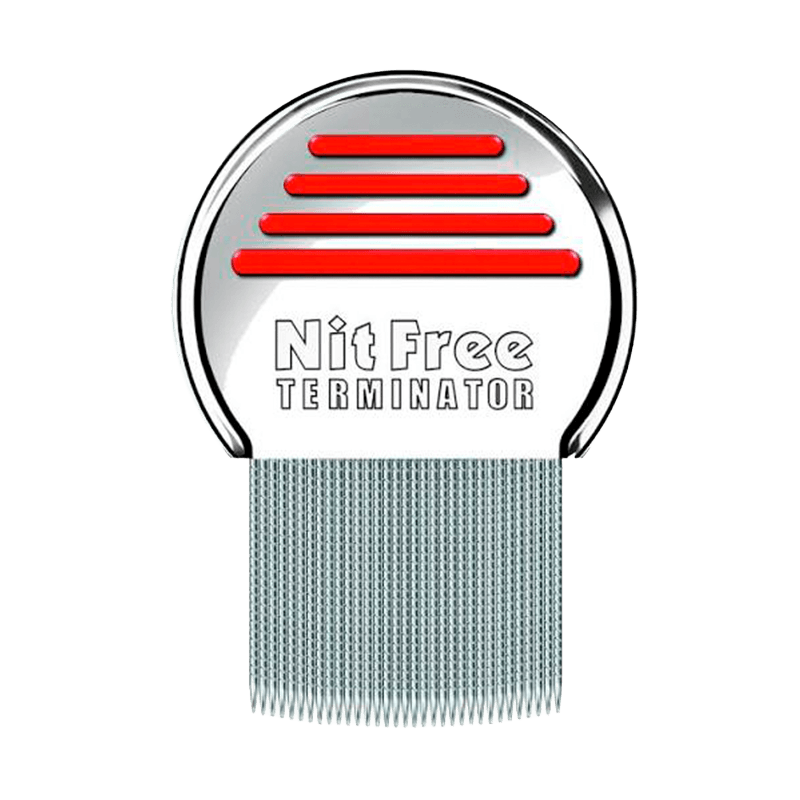
Frequently Asked Questions
Can dandruff look like lice eggs?
Yes. Both appear as small white particles in the hair, which is why they are commonly confused.
Do lice eggs brush away like dandruff?
No. Nits remain attached to the hair shaft and usually cannot be brushed away easily.
What color are lice eggs?
Live eggs are often tan, yellow or brown. Empty egg cases become pale or white after hatching.
Where should I look for nits?
Behind the ears, around the neckline and close to the scalp are the most common locations.
Can shampoo remove lice eggs?
Shampoo alone usually cannot remove nits because they are firmly attached to the hair shaft.
How can I confirm whether they are lice eggs?
Carefully inspect whether the particles remain attached to individual hairs. Using a precision lice comb can help confirm and remove nits.