
Treatment Guide
What Kills Lice Eggs?
Lice eggs, also known as nits, are protected by a durable outer shell and firmly attached to the hair shaft. While many lice treatments target live lice, removing the eggs themselves usually requires careful mechanical combing.
- Lice eggs are naturally well protected.
- Many treatments focus primarily on live lice.
- Mechanical removal helps eliminate remaining eggs.
Why Lice Eggs Are Difficult to Eliminate
Lice eggs are designed to protect the developing louse until it hatches. Each egg is surrounded by a protective shell and attached securely to a single hair using a strong natural adhesive.
Because of this structure, lice eggs are considerably more resistant than live lice. Even after successful treatment, eggs may remain attached to the hair until they are manually removed.
Clinical reference. The Centers for Disease Control and Prevention (CDC) explains that lice eggs (nits) are attached to the hair shaft with a cement-like substance and are not easily removed by washing alone.
Centers for Disease Control and Prevention (CDC)
Do Lice Treatments Kill the Eggs?
Different lice treatments work in different ways. Some products are designed to kill live lice, while others attempt to interfere with egg development.
However, no single approach guarantees that every egg has been eliminated. This is why follow-up inspection and mechanical removal remain important parts of many treatment protocols.
Clinical reference. According to the CDC, many lice treatments are more effective against live lice than unhatched eggs, which is why follow-up treatment and careful nit removal are commonly recommended.
CDC Head Lice Treatment Guidance
Why Removing Nits Still Matters
Even when live lice have been treated, viable eggs can eventually hatch if they remain attached to the hair.
Removing nits reduces the chance of newly hatched lice remaining in the hair and makes it easier to confirm that treatment has been successful.
Common Ways People Try to Kill Lice Eggs
Can Shampoo Remove Lice Eggs?
Ordinary shampoo is not designed to remove nits. Because lice eggs are glued to the hair shaft, washing alone usually does not detach them.
Specialized lice shampoos may help control live lice depending on the product, but physical removal is often still recommended for the remaining eggs.
Mechanical Removal Is an Important Step
Precision combing physically removes lice eggs from the hair. Unlike chemical approaches, it does not rely on affecting the egg itself—it removes it from the hair shaft.
For this reason, healthcare professionals and lice removal clinics commonly include careful combing as part of the overall management process.
What Happens If You Leave Nits in the Hair?
Some eggs may already be empty and no longer represent an active infestation. Others may still contain developing lice.
Because it can be difficult to distinguish between viable and empty eggs during a quick inspection, removing them helps ensure the hair is completely cleared.
Designed for Effective Nit Removal
Nit Free Terminator is a professional-grade stainless steel lice comb trusted by clinics, healthcare professionals and families worldwide.
Its precision tooth spacing and micro-grooved teeth are engineered to help capture and remove lice, nits and empty egg cases from the hair.
Whether you're checking the results of a treatment or completing the removal process, effective combing starts with a precision-built lice comb.
Explore Nit Free Terminator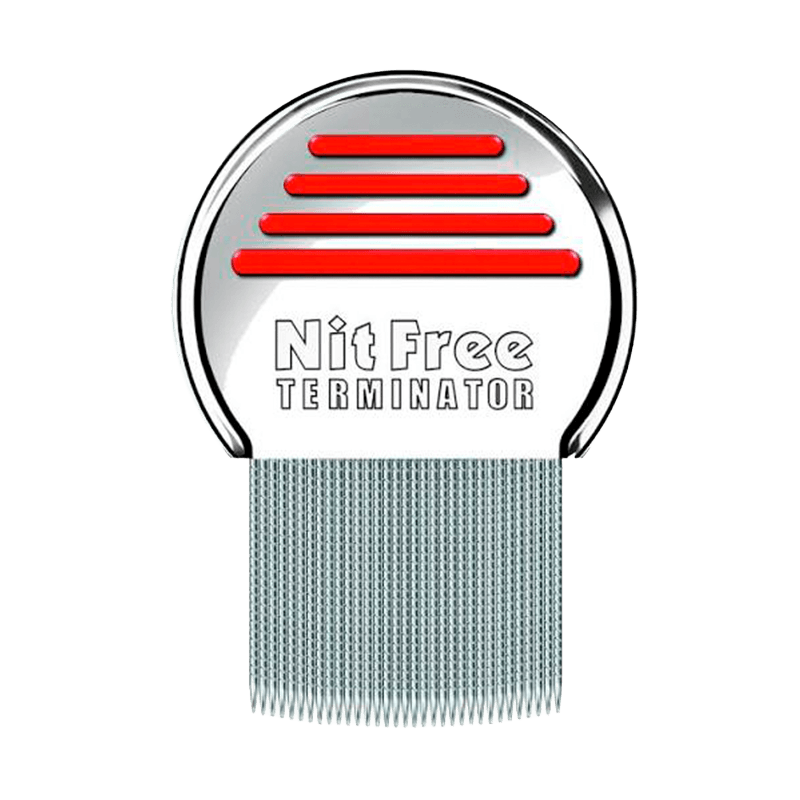
Frequently Asked Questions
Can lice eggs survive treatment?
Yes. Some lice treatments primarily target live lice, which is why follow-up inspection and nit removal are commonly recommended.
Does shampoo kill lice eggs?
Ordinary shampoo does not remove or kill nits because they are firmly attached to the hair shaft.
Why are lice eggs difficult to remove?
Each egg is attached with a strong natural adhesive that keeps it firmly fixed to the hair.
Do I need to remove empty egg cases?
Removing empty egg cases can help confirm that the hair has been thoroughly cleared and reduce confusion during future inspections.
What is the best way to remove lice eggs?
Careful section-by-section combing with a precision lice comb is one of the most effective methods for removing nits from the hair.
Why do professionals use lice combs after treatment?
Mechanical removal helps eliminate remaining nits and allows the hair to be carefully inspected after treatment.